Reconstruction of the Rhine Bridges and their Construction by Gaius Iulius Caesar; 55 and 53 BCE
These 3D reconstructions were part of a chapter of my BA thesis in Ancient History (2017) at the University of Cologne and are based upon Caesars descriptions in the Bello Gallico and a historic commentary by myself about the vocabulary he used. For this work I analysed nearly 200 years of academic research about these bridges, starting with Napoleon Bonaparte.
The scientific report with historic commentary (in german) is published on this website: http://www.bernd-nebel.de/bruecken/3_bedeutend/caesar/texte/BA_Caesars_erste_Rhein%C3%BCberquerung_Reko.pdf
My other main results of my BA about the location of this bridge are published here (again in german): Daniel Hinz, Caesars Rheinbrücken – eine unendliche Geschichte? Neue Überlegungen zur Lokalisierung im Kontext von 200 Jahren Forschung. In: Kölner und Bonner Archaeologica (KuBA), 8/2018, 5-16.
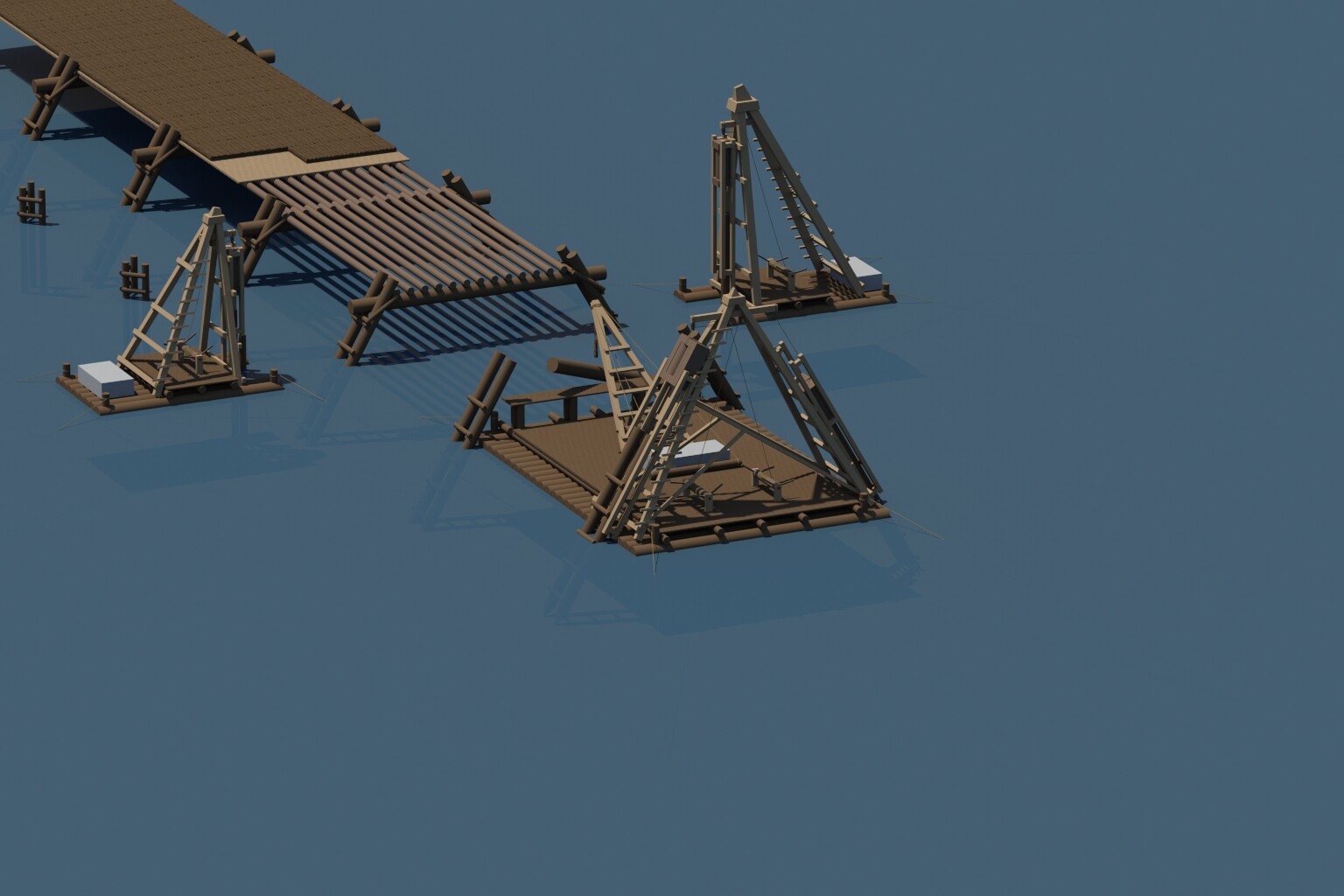
Panorama of the construction site. With such an arrangement the claimed building of the bridge in just 10 days by Caesar over ca. 300m length would be possible.


Main structural component of the bridge.


Details of the bridge decking

Caesar describes 'machinae' used for building the bridge. This could mean just the cranes, but Vitruvius makes remarks about using pile rammers in wet conditions. With the help of experimental archaeology such kind of raft could be possible and probable.

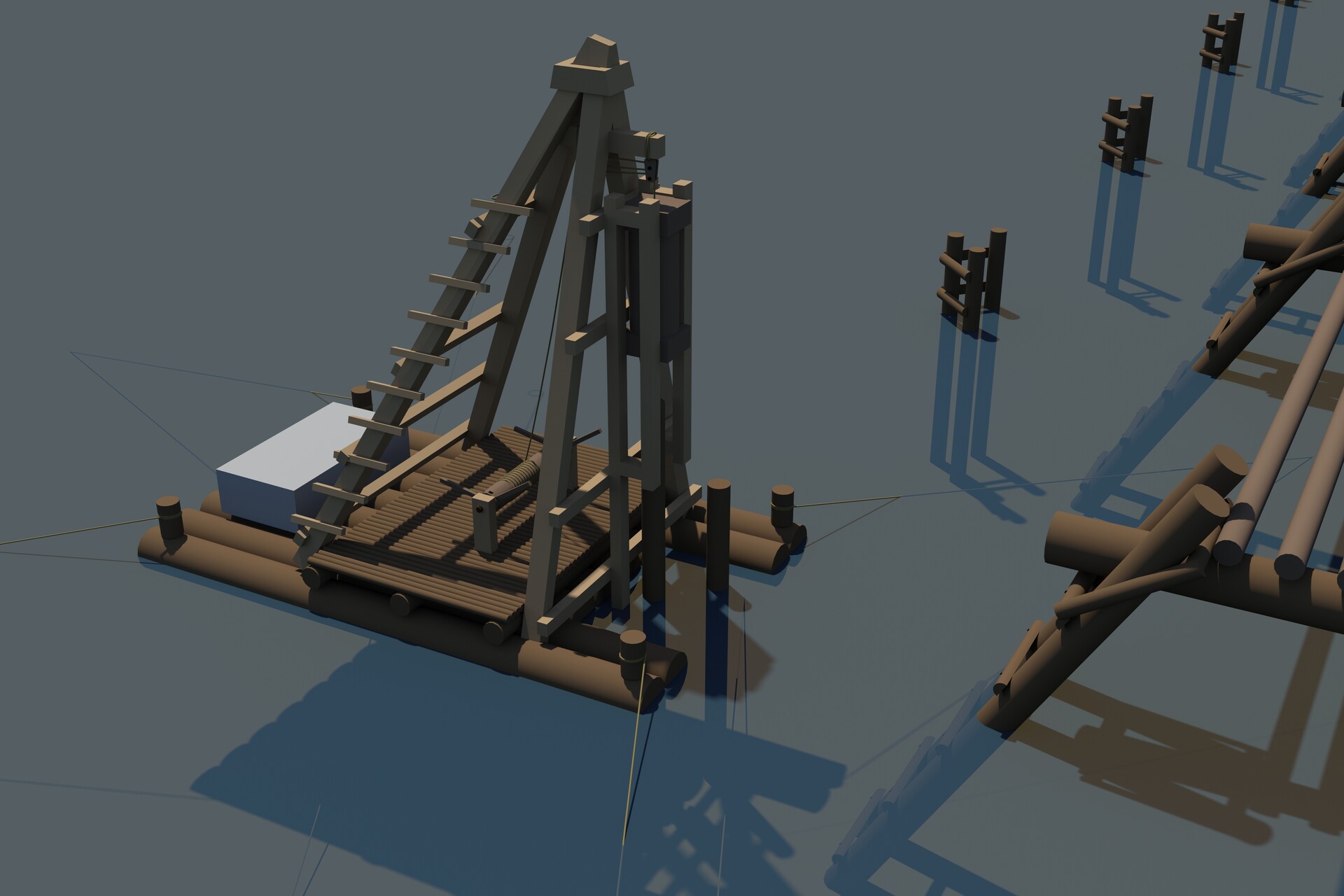
Another 'machina' with pile rammer, based on descriptions by Vitruvius in de architectura.
